Medicare Supplements
AKA Medigap, Understanding Your Options
Medicare provides excellent coverage, but it doesn’t pay 100% of every healthcare expense. That’s where Medicare Supplement insurance, also known as Medigap, can help.
If you’re new to Medicare, understanding deductibles, coinsurance, co-payments, and out-of-pocket expenses can feel overwhelming. The good news is that Medigap plans are designed to make these costs more predictable and easier to manage.
Let’s take a closer look at how Medicare Supplement plans work and what you should know when choosing one.
First, a Quick Look at Medicare
Before discussing Medicare Supplement plans, it helps understand the basic parts of Medicare:
Medicare Part A helps cover inpatient hospital care, skilled nursing facility care, hospice care, and certain other services.
Medicare Part B helps cover doctor visits, outpatient care, preventive services, and medically necessary services.
Medicare Part C, also know as Medicare Advantage, is an alternative way to receive your Medicare benefits through a private insurance company. Medicare Advantage plans often include additional benefits beyond Original Medicare.
Medicare Part D provides prescription drug coverage.
Medicare Supplement plans work specifically with Original Medicare (Parts A and B). They help pay some of the deductibles, coinsurance, and other costs that Original Medicare leaves you responsible for.
What is a Medicare Supplement Plan?
A Medicare Supplement plan, or Medigap plan, is private insurtance designed to work alongside Original Medicare.
When Medicare pays its share of a covered medical expense, your Medigap plan can help pay some of the remaining costs, depending on the plan you choose.
One of the biggest advantages of Medigap is predictability. Instead of worrying about paying the full Medicare-approved cost-sharing amount yourself, you can choose a plan that helps cover many of those expenses.
Medigap Plans are Standardized
Medicare Supplement plans are standardized by the federal government.
That means a Plan G generally provides the same standardized benefits regardless of which insurance company offers it. The same is true for other standardized plan letters.
However, premiums, customer service, underwriting rules, and other factors can vary from one insurance company to another. That’s why comparing companies is just as important as choosing the right plan letter.
Understanding the Different Medigap Plans
There are several standardized Medigap plans available, although not every plan is offered by every insurance company.
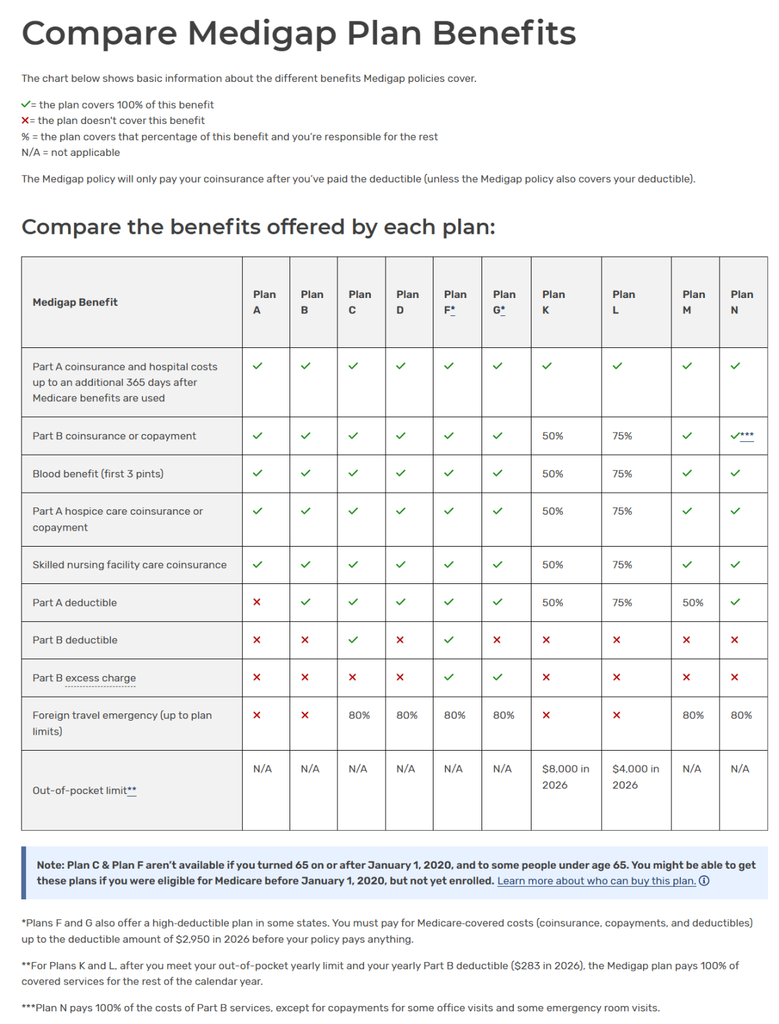
Here’s a quick overview of the most popular plans today:
Plan F
Historically, Plan F has been one of the most comprehensive Medigap options because it covers nearly all Medicare-approved cost-sharing. This plan is only available to people who were eligible for Medicare before January 1, 2020.
Plan G
One of the most popular choices for people newly eligible for Medicare. Plan G covers most Medicare-approved cost-sharing after you meet the Medicare Part B deductible.
Plan N
Provides substantial coverage while typically requiring certain co-payments for some doctor’s office visits and emergency room visits.
Plan High Deductible G (HDG)
HDG offers the same core benefits as Standard Plan G, but with a higher annual deductible before the plan begins paying. In exchange, it typically comes with a significantly lower monthly premium, making it an option worth considering for those who want comprehensive coverage while keeping monthly costs down.
View our Medigap Plan Comparison Chart below:
How Do You Choose the Right Medigap Plan?
There isn’t one Medigap plan that’s right for everyone. The best choice depends on several factors, including your healthcare needs, budget, travel plans, and how much you value predictable healthcare costs.
For example, someone who wants more predictable out-of-pocket expenses may prefer a more comprehensive plan such as Plan G. Someone who is comfortable with some co-payments in exchange for potentially lower premiums may want to consider Plan N.
It’s also important to look beyond the plan letter. Premiums can vary significantly between insurance companies even though the standardized benefits are the same.
That’s where working with an independent Medicare insurance broker can be helpful.l We can compare the available options and help you understand the difference so you can make an informed decision.
Your Medigap Open Enrollment Period
One of the most important times to consider a Medicare Supplement plan is your Medigap Open Enrollment Period. Your six-month Medigap Open Enrollment Period begins when you’re 65 or older and newly enrolled in Medicare Part B.
During this period, you generally have important protections that can make it easier to purchase a Medigap policy. In most cases, insurance companies cannot use your health history to deny coverage or charge you more because of your health. Once this enrollment period ends, you may still be able to purchase a Medigap plan, but you may not have the same protections. Depending on your circumstances and state rules, medical underwriting may apply.
That’s why timing can be very important when choosing a Medicare Supplement plan.
Don’t Just Set It and Forget It
Choosing a Medigap plan isn’t necessarily the end of the process. Premiums can change over time, and your healthcare needs and financial situation can change as well. That’s why we believe it’s important to periodically review your coverage.
As part of our service, we offer an annual Medicare plan review.
We’ll review your current coverage, look at available options, and help you determine whether your exisiting plan continues to make sense for your situation. You may need to change plans-and sometimes staying where you are is the best decision. The goal is simply to make sure you understand your options and aren’t overpaying more than necessary for the coverage you want.
How Do You Enroll in a Medicare Supplement Plan?
If you’re ready to explore your Medigap options, the process is usually straightforward.
1. Compare Your Options
We’ll help you compare the Medigap plans and insurance companies available in your area.
2. Choose the Coverage That Fits Your Needs
We’ll explain the differences between the plans, including benefits, premiums, and potential out-of-pocket costs, so you can make an informed decision.
3. Complete Your Application
Once you’ve selected a plan, we’ll help you complete the application and handle the enrollment process. Our goal is to make the process as simple and stress-free as possible.
Common Medigap Mistakes to Avoid
Waiting too long to explore your options
Your Medigap Open Enrollment Period provides important protections, so it’s worth understanding your options when you first become eligible.
Choosing a plan based solely on price
The lowest premium isn’t always the best value. Consider the coverage, cost-sharing, rate history, and insurance company customer service as well.
Assuming every insurance company is the same
The standardized benefits may be the same, but premiums and other factors can vary greatly between companies.
Forgetting to review your coverage
Your situation can change over time. An annual review can help you determine whether your current coverage and premium still make sense.
We’re Here to Help
Medicare doesn’t have to be complicated.
Medicare Supplement plans can be an excellent way to help manage the healthcare costs that Original Medicare doesn’t cover. The key is understanding how the plans work and choosing coverage that fits your needs and budget.
You don’t have to navigate the options alone
As your Medicare insurance advisor, we’re here to answer your questions, compare the available plans, and help you make an informed decision-without pressure.
Ready to compare Medicare Supplement Plans?
Schedule a Call/Meeting or call us at 214-842-4394 to speak with a licensed Medicare insurance advisor.